
YouTube widens the gap
In the United States, the podcast platform battle now has an undisputed leader. According to Edison Research's Podcast Metrics, produced with SSRS for the third quarter of 2026, 40% of weekly podcast consumers aged 13 and over name YouTube as the service they use most often to listen to or watch podcasts.
Spotify comes second with 17%, and Apple Podcasts third with 9%. The gap is huge: YouTube has more than twice as many primary users as Spotify, and more than four times as many as Apple Podcasts.
A landscape transformed in two years
A comparison with an earlier Edison reading shows how fast the shift has been. In October 2024, YouTube was already in first place, but with 31%, against 27% for Spotify and 15% for Apple Podcasts. In two years, YouTube has gained nine points, while Spotify lost ten and Apple Podcasts six.
Edison points out that the growth of podcast content on YouTube has reshaped the whole ecosystem. A podcast is no longer just an audio file downloaded in a dedicated app: it is increasingly a video that people watch, or play in the background, on a general-purpose platform.
Netflix joins the race
Another takeaway from the quarter: Netflix now appears in the ranking. The streaming service sits in seventh place, with 3% of weekly podcast consumers naming it as their main podcast platform. Edison notes that this figure only covers people who use it as their primary service and does not reflect all podcast listening or viewing on Netflix.
The arrival of a video-born player confirms the underlying trend: video-first platforms are gaining ground, and services that were historically built around audio are under pressure to adapt.
What it means for webradios
These figures concern the US market, but they point to changes that broadcasters elsewhere would do well to anticipate:
- Treat YouTube as a distribution channel: publishing flagship shows, segments or interviews as video, or at least with a still image, lets you reach audiences where they already are.
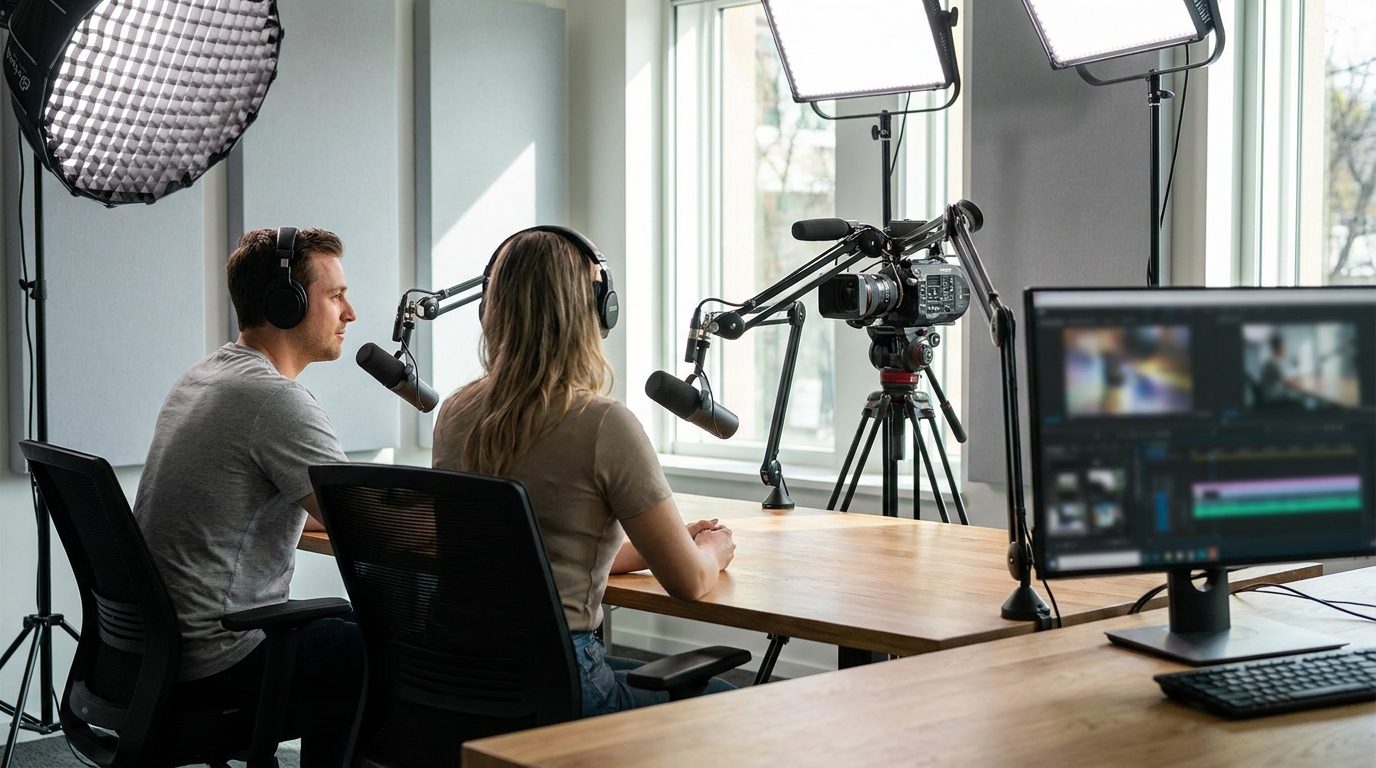
- Film the studio: a single camera in the studio is often enough to turn a show into a video programme, without giving up radio know-how.
- Don't neglect audio platforms: Spotify and Apple Podcasts remain important access points, and live listening to the webradio keeps its own logic.
- Work on discovery: on a platform where the algorithm decides, titles, thumbnails and descriptions matter almost as much as the content itself.
For a webradio, the goal is not to become a video channel but to turn podcasts and video into gateways to the live stream. A listener who discovers a show on YouTube can then tune in to the station, as long as the path to the player is clearly signposted in every video.