
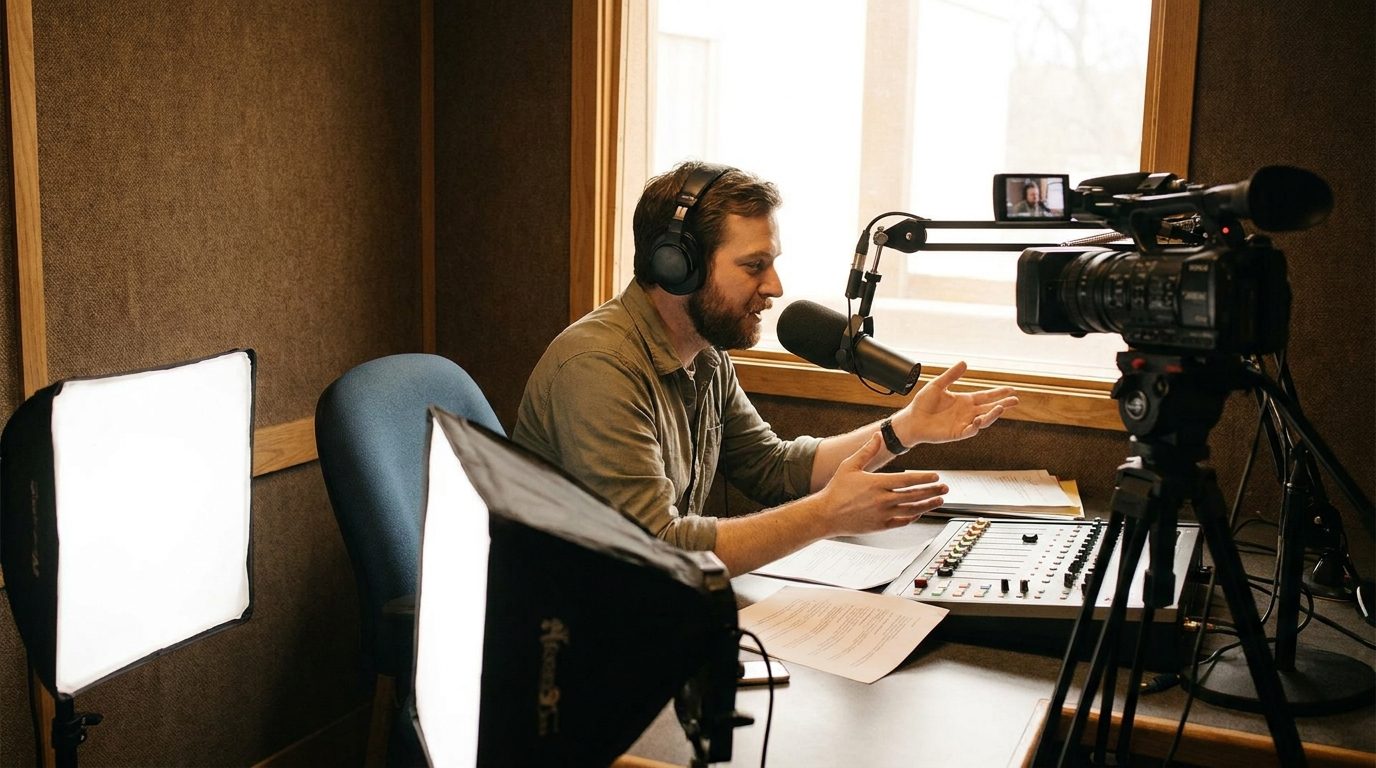
Podcasts are no longer just something people listen to: more and more, they are something people watch, especially on YouTube. This shift is forcing audio teams to get up to speed fast on lighting, camera placement, thumbnail design and platform analytics. During a webinar hosted by The Podglomerate and the Association for Independents in Radio (AIR), reported by Inside Radio, several US producers shared an encouraging observation for the radio world: voices trained on live air start with a real head start.
Live radio, a training ground that pays off on camera
For Rachel Passer, Supervising Producer at the Daily Beast, the hardest part of a video podcast is not technical. The real challenge is finding personalities who can speak naturally and confidently. That is exactly what radio has been developing for decades. She even counts people coming from radio among the best talent she has worked with.
Her explanation comes down to the pressure of live broadcasting: there is no second take, you have to sound right the first time, project your voice and stay concise. Rachel Passer speaks from experience: before the Daily Beast, she was executive producer of "The Julia Show", a nationally syndicated program that aired in 13 US markets.
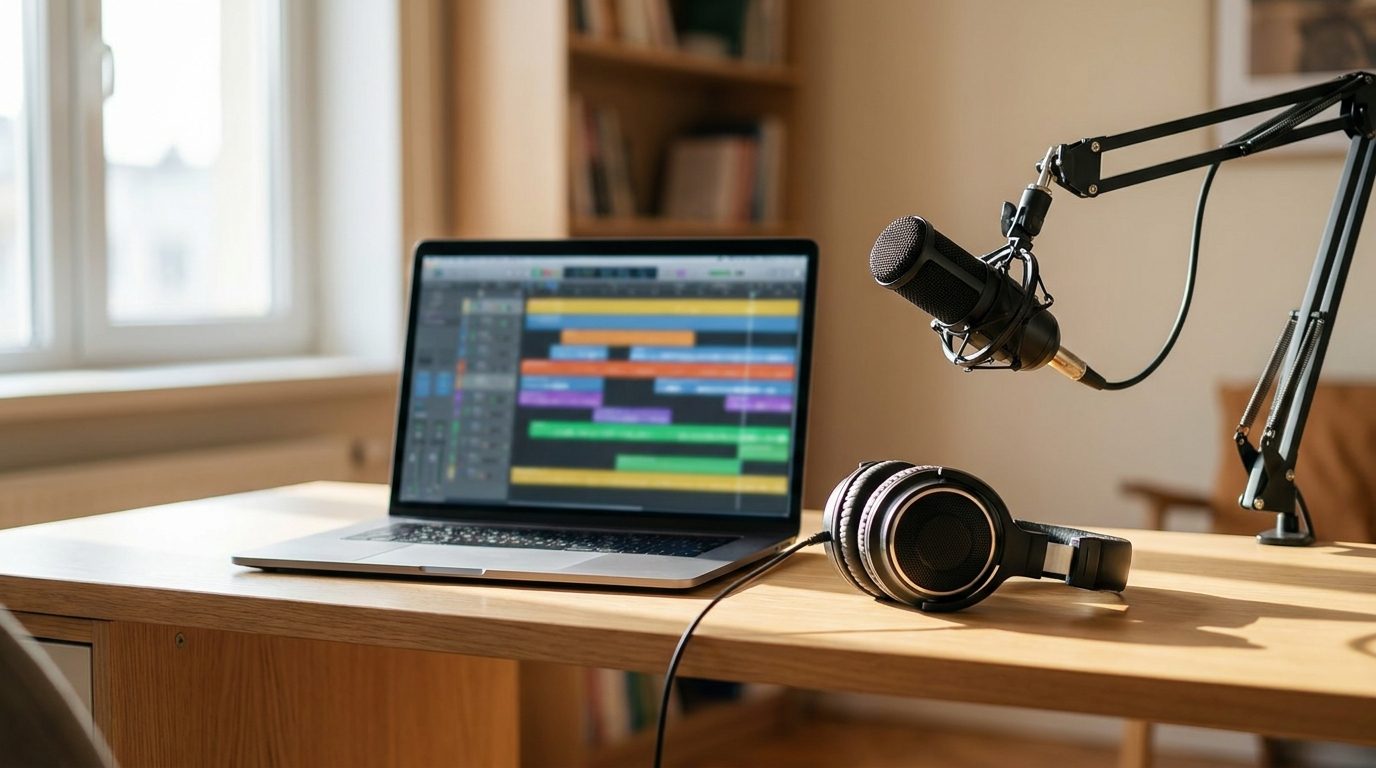
Habits nobody saw on radio become visible on screen
Being comfortable behind a microphone is not enough, though. Some gestures went unnoticed as long as nobody could see the studio: looking down to take notes, jotting down a headline idea while a guest is talking. In front of a camera, these habits stand out immediately. Journalists used to the formal tone of broadcast news also need to loosen up. Rachel Passer's advice fits in one line: talk like a person.
The set matters too. The head of podcast production at investigative outlet The Lever explains that the host's home office was upgraded with better lighting, a camera and a teleprompter. Switching on the lights and settling into that setup helps the host get into an on-camera frame of mind.
YouTube does not work like a podcast app
The deepest change concerns distribution. Nick Castner, Strategic Partner Manager at YouTube, points out that the platform does not just serve episodes to existing subscribers: its recommendation system can put a show in front of viewers who have never come across it. In his view, two factors dominate: do people click on the video, and do they stay once they have started watching?
The title and thumbnail drive the click; the topic, storytelling and production quality drive retention. Together they should make a promise that is delivered early in the video. The direct consequence: simply reusing the episode title from the RSS feed is not necessarily a good idea. Producers need to think about someone discovering the show for the first time.
The Daily Beast has adjusted its thumbnails accordingly: on some of them, original illustrations gave way to recognizable faces, which performed better according to audience data. Rachel Passer also advises against repeating the title on the thumbnail: the two can complement each other to spark curiosity. At The Lever, a title tied to breaking news is sometimes replaced, once the news cycle has passed, with more evergreen wording that gives the episode a second chance.
What this means for internet radio stations
For internet radio publishers, this feedback is good news. Hosts who run live shows already have the rarest skill: speaking well without a safety net. Filming a flagship show, an interview or a regular segment can therefore become a way to introduce the station to new audiences.
Jeff Umbro, CEO of The Podglomerate, stresses that going all-in on video is not the only option. Original video performs better when you have the resources. Otherwise, being on YouTube is still worthwhile, even when episodes arrive there automatically through the RSS feed, as long as they get a title, description and thumbnail designed for the platform.
- Identify the hosts who are at ease and the formats that work on screen.
- Take care of lighting and framing, even with modest equipment.
- Adapt titles and thumbnails for viewers who do not know the station yet.
Source: Inside Radio