
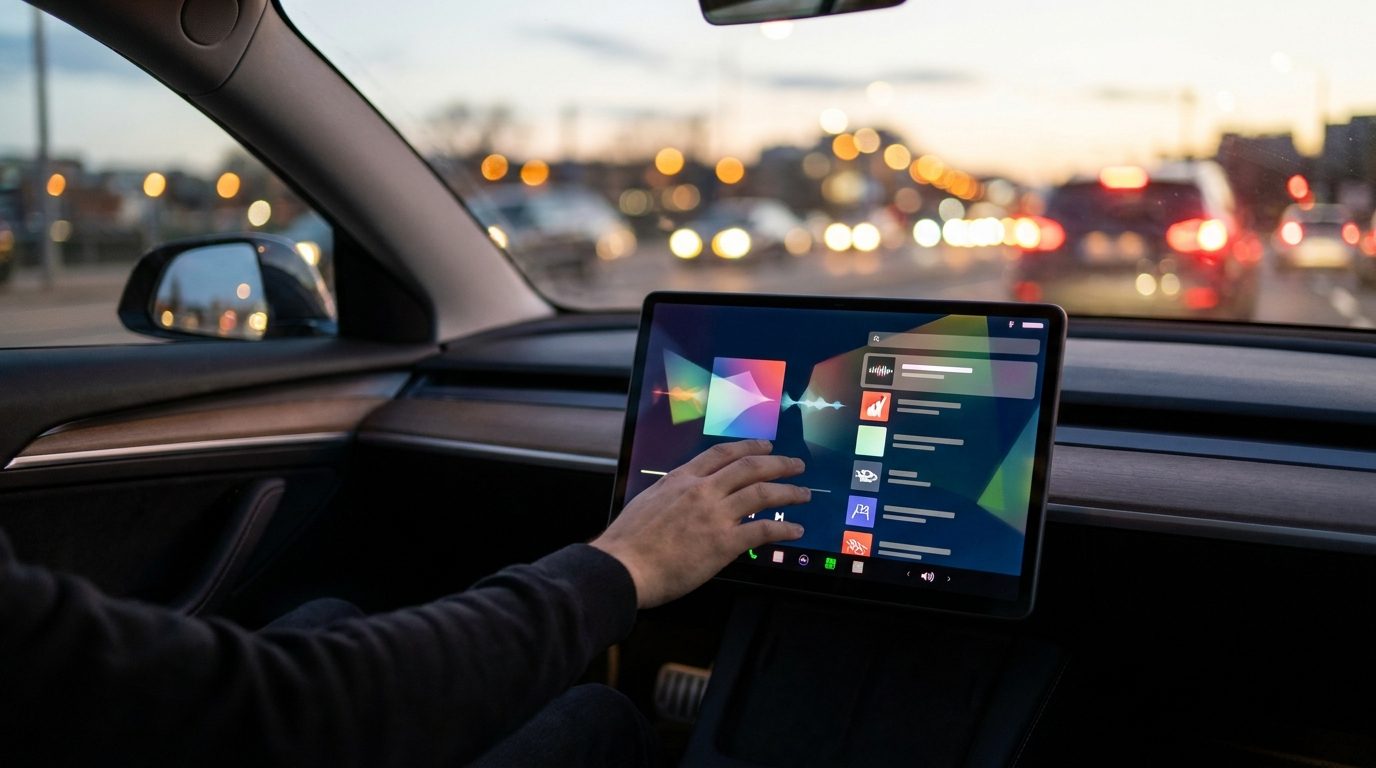
For decades, people found a radio station on a dial. Today they ask a voice assistant for it, pick it in an aggregator or tap it on a connected car screen. That was the message delivered in Milan on 29 October 2026 by lawyer Massimo Lualdi, founder of Consultmedia and director of Newslinet, at a workshop hosted by Giornale Radio at Allianz MiCo as part of Intersections 2026. His point to broadcasters was simple: radio can remain radio even without a radio receiver, as long as machines know how to find it.
From 80 frequencies to 100,000 streams
Lualdi described the shift in three stages. On FM, the challenge was technical: being heard among roughly 80 stations. DAB+ added multiplexes, identifiers and station lists of up to 230 entries. With streaming comes a new problem: being discoverable among some 100,000 streams worldwide. Also on the panel were Domenico Zambarelli, publisher of Giornale Radio, Robert Förster of Radiozeit and Alessandro Musumeci of Fiat and Abarth.
US figures from Edison Research quoted during the session show how content and device are drifting apart. Among 13 to 34-year-olds, radio accounts for 70% of ad-supported audio listening time in the car. Yet in the second quarter of 2026, for the same age group, mobile devices overtook the AM/FM receiver as the way to access audio in the car: 46% versus 43%. In the US, 14% of time spent with linear radio already went through station streams in the first quarter of 2026, and 30% of weekly listeners to over-the-air stations also listen to them online.
Voice changes the rules
According to Audacy's Connected Car Study 2026, 54% of connected car drivers want a fully integrated voice system. Among those already using voice commands, 57% use them to play radio, music or podcasts, and 50% to discover new audio content. For Lualdi, everything depends on how the request is phrased: asking for a specific station is an instruction, while asking for "a news station" hands the choice to an intermediary that interprets, searches its catalogue and decides. From then on, the station name, metadata, category, identifier and stream availability become part of distribution itself.
He mentioned names that announce their content, such as Classic FM, 80s80s, Radio Rock or JazzRadio, while stressing that nothing proves an algorithm will favour them. He did, however, warn against asterisks, hash signs or exclamation marks added to DAB+ identifiers to climb alphabetical lists: in the Milan area, more than 50 out of about 230 stations use them. Handy in a visual list, the trick can backfire with a system that has to understand a spoken name.
What it means for web radio stations
For a web radio, which already lives entirely on IP, these observations read like a roadmap:
- A clear, pronounceable name: avoid symbols and ambiguous spellings that a voice assistant could not interpret.
- Careful metadata: genre, language, country, description and logo should be consistent across every directory and aggregator.
- A stream that is always up: a broken URL means a station that vanishes from catalogues.
- Presence wherever presets now live: your own app, aggregators, smart speakers, CarPlay, Android Auto. As the speaker put it, whoever controls that access point becomes an intermediary.
Measurement has to keep up
The final topic was cross-platform audience measurement. In Canada, Numeris will replace the Online Radio Diary with Radio Local+ in 22 local markets, combining streaming data, two surveys and modelling, with four releases a year instead of two. In Italy, Audiradio plans an SDK to capture digital listening. Lualdi expects FM, DAB+ and IP to coexist for a long time, with IP steadily gaining ground. Coverage, identification, discoverability and measurement are becoming the four priorities for every broadcaster, web radios included.
Source: FM-World