
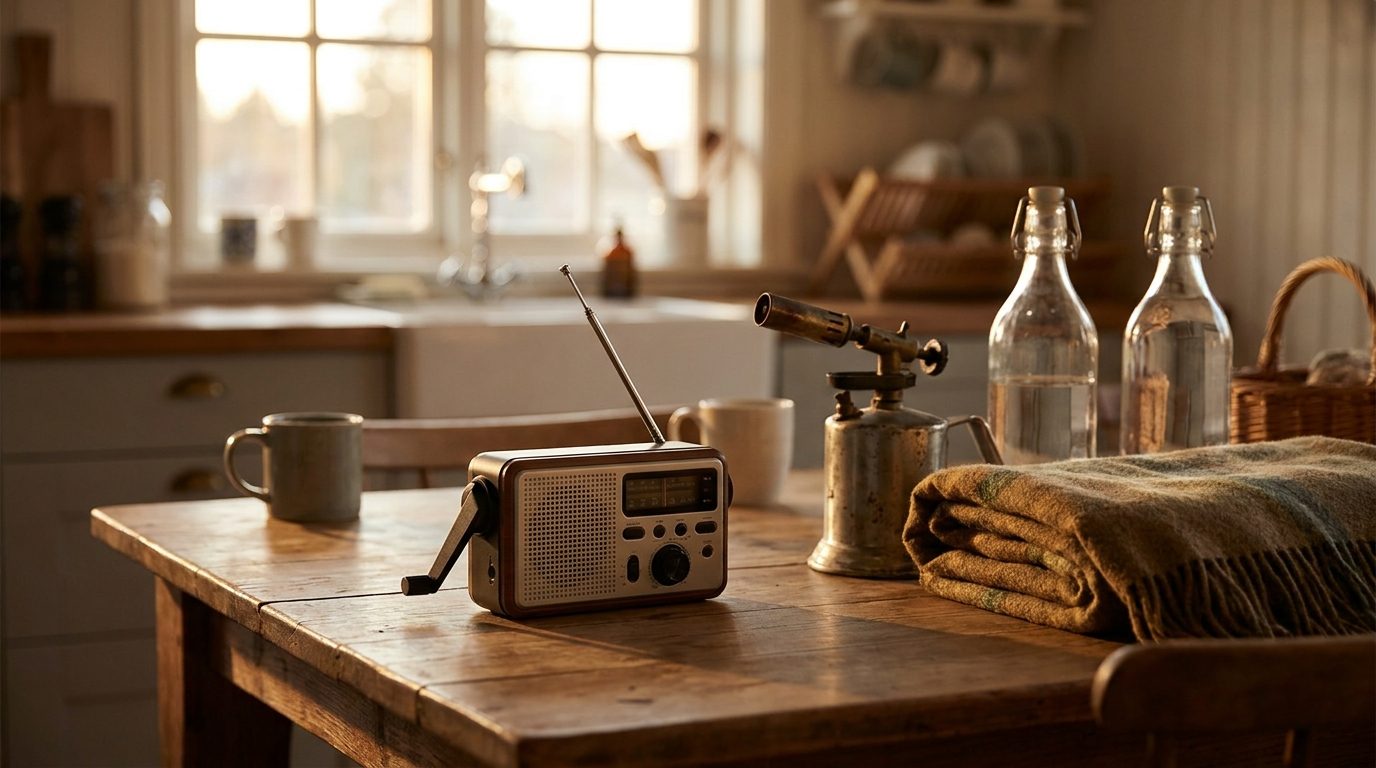
In the United Kingdom, crisis preparedness is becoming a household matter. The British government has launched a campaign called "Be Ready", encouraging people to organise themselves to cope for at least 72 hours in a serious situation. On the list of recommended equipment, alongside stocks of water and food, sits an item many thought had been consigned to the attic: an FM radio powered by a hand crank.
A survival list with room for radio
According to the guidelines reported by the Guardian, then picked up by the Italian site Open and by FM-world, the British authorities are asking residents to build a basic supply to get through the first hours of a crisis. The scenarios mentioned are varied: severe weather disasters, cyberattacks and threats to infrastructure from hostile states.
The recommended kit includes:
- drinking water and food;
- blankets;
- cash;
- a torch and a first aid kit;
- a wind-up FM radio.
Security Minister Dan Jarvis has called on citizens who are able to do so to follow these recommendations. The campaign will also be supported by advertising on social media and on radio.
Why FM rather than an app
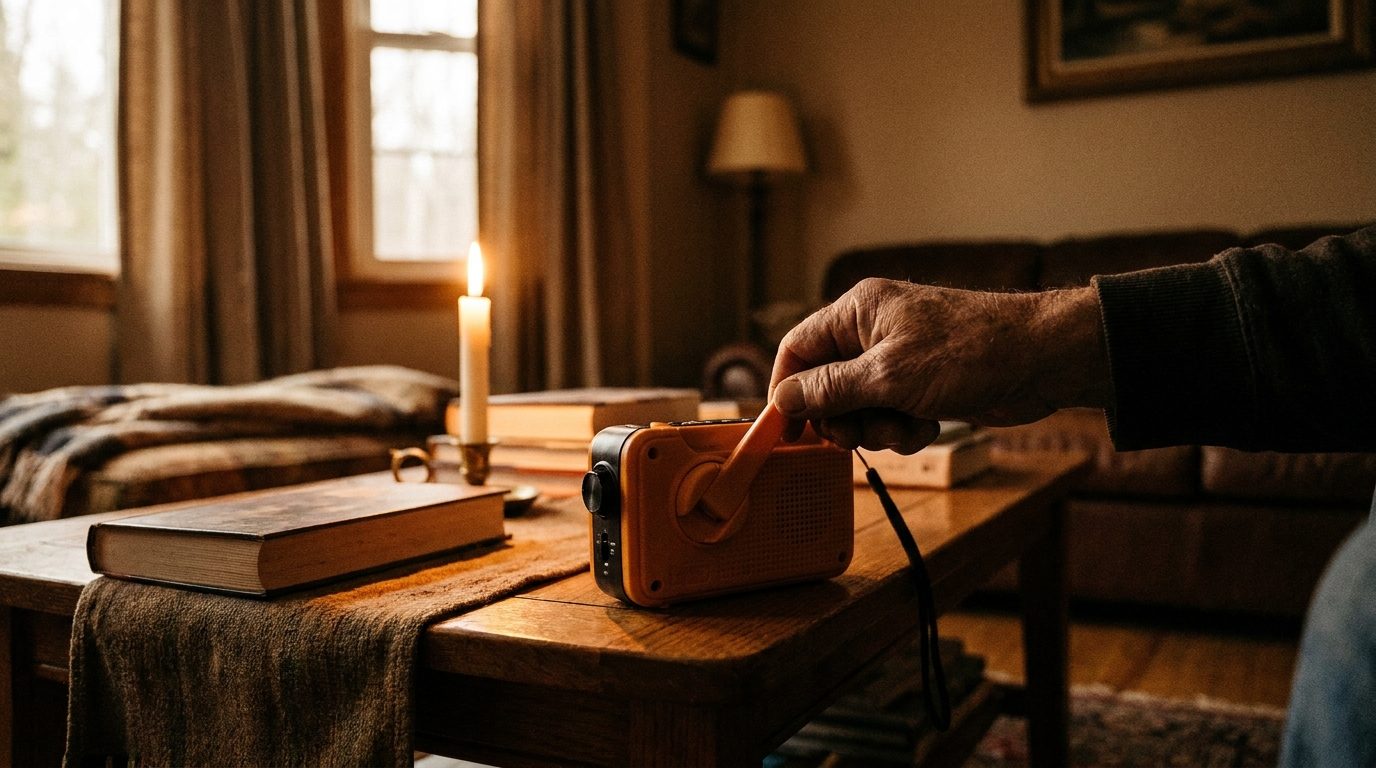
The choice of a wind-up FM receiver is far from trivial. In the event of a widespread power cut or a failure of mobile networks and the internet, a smartphone quickly becomes useless, and a smart speaker even more so. A self-powered set that can be recharged by hand, on the other hand, keeps receiving official information, provided the transmitters stay on air. It depends neither on the power grid nor on charged batteries.
For the radio industry, this mention is a form of public recognition: at a time when listening is shifting to digital, a government is reminding everyone that over-the-air broadcasting remains a link in the civil protection chain.
What it means for web radio
For a web radio operator, the message is twofold. First, it highlights a limitation: an online stream depends entirely on the internet chain, from the streaming server to the listener's router or mobile plan. In a major crisis, that chain can break. Second, it is a reminder that audiences are also built on trust: listeners turn to radio when they are looking for reliable information.
A few practical ideas follow:
- Strengthen technical resilience: a backup server, redundant hosting and a recovery procedure if the studio playout fails.
- Plan for public service information: a local web radio can relay official instructions as soon as the network is restored, or through its other channels.
- Consider complementary broadcasting: for projects with the means, DAB+ or FM remain the channels that hold up when the internet falters.
Complementary rather than competing
The British campaign does not call online listening into question; it keeps growing across Europe. Rather, it shows that each distribution method has its role. Streaming offers diversity, global reach and interactivity; terrestrial broadcasting ensures continuity in the worst-case scenarios. For web radios, it is an opportunity to think about their place in the local information ecosystem, and to prepare themselves to get through the first hours of a crisis too.
Source : FM-world