
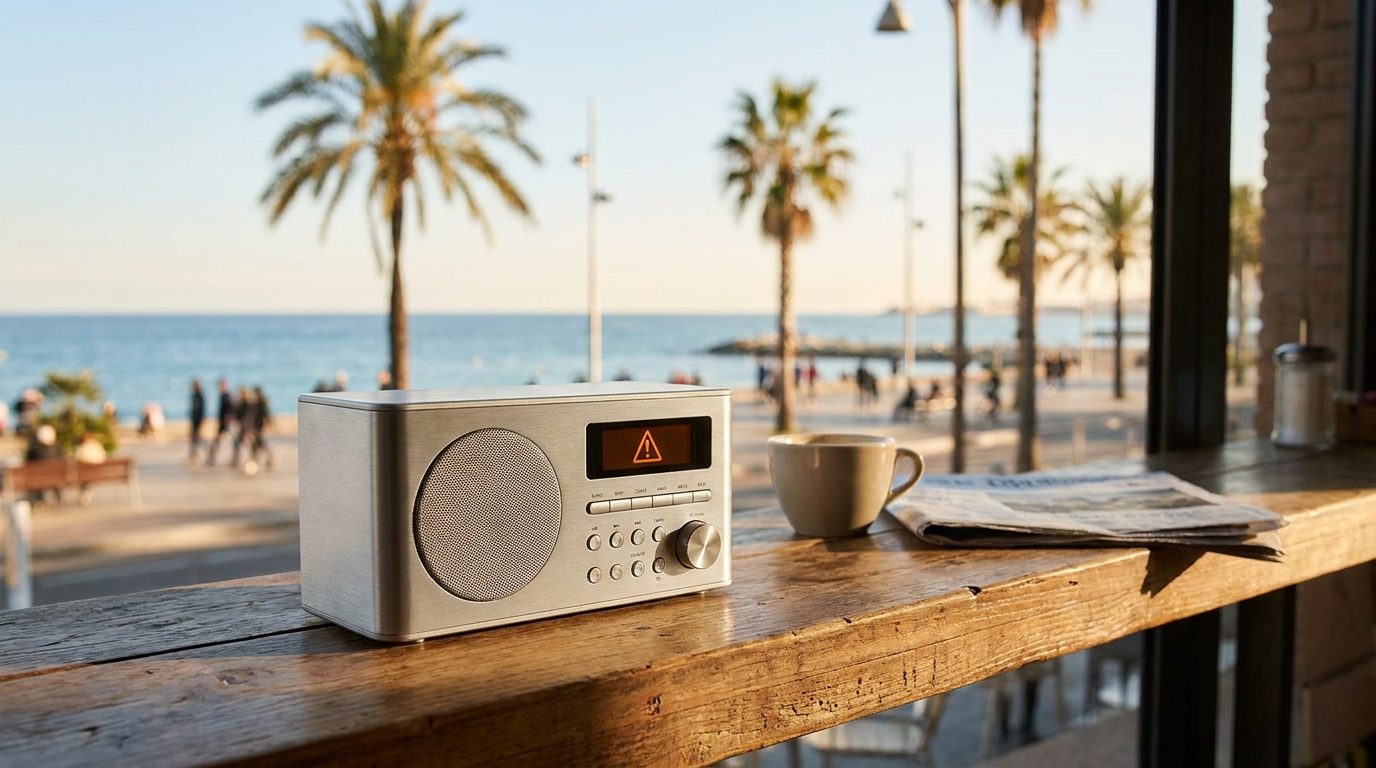
A tsunami drill to test a technology new to France
On Monday 30 November 2026, between 2pm and 4pm, the Alpes-Maritimes prefecture is holding a civil protection exercise that simulates a tsunami hitting the French Riviera. It is working with the towns of Nice and Cannes and with Radio France, represented by its local station ICI Azur. The aim is to trigger every public warning channel at once. Among them is a national first: automatic alerts on DAB+ receivers compatible with the ASA standard, short for Automatic Safety Alert.
The scenario imagines a tsunami caused by a tectonic shift off the African coast. Detection and the start of the warning procedure are scheduled for 2pm. At 2.30pm, the prefecture will simultaneously activate FR-Alert on mobile phones and the ASA alert on compatible DAB+ sets. Sirens in the affected areas will also sound, and Cannes will use the loudspeakers installed along its seafront.
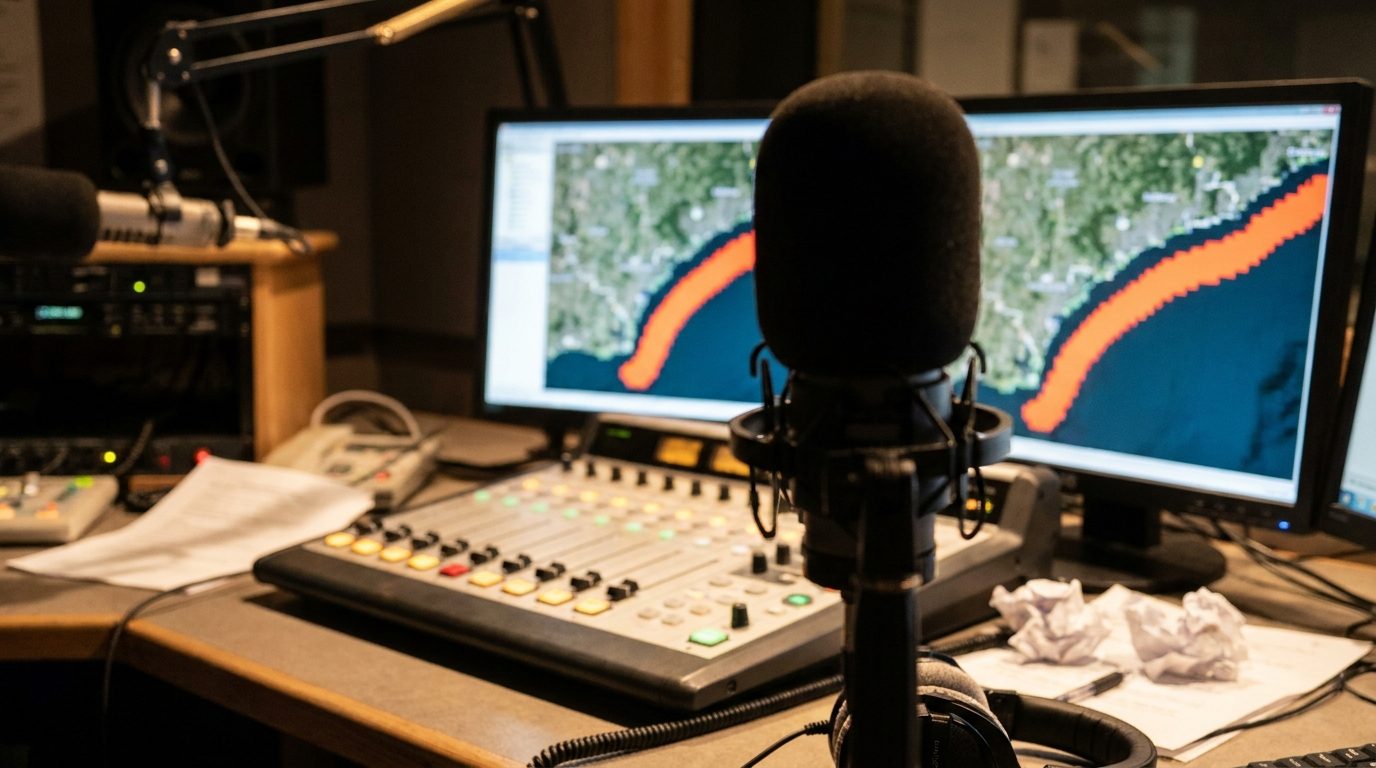
How ASA alerts work
The idea fits in one sentence: a DAB+ receiver fitted with ASA can switch itself on, even from standby, to play a priority audio warning. The message can come with text and images, and it needs no internet connection because it travels over digital terrestrial radio.
Radio France also highlights geographic targeting. The alert can be limited to the area actually at risk, which is especially useful for tsunamis, where evacuation may only concern the shoreline. During the drill, the goal is to move people out of a 200-metre coastal strip.
- Around twenty DAB+/ASA compatible receivers will be placed in public spaces between Nice and Cannes to check activation and signal reception.
- 621 radio stations are now broadcast on DAB+ in France, according to the prefecture.
- 81% of the population of mainland France will be covered by DAB+ by the end of the year.
The prefecture stresses that the test will have no impact on residents.
Radio confirmed as a pillar of resilience
During the exercise, ICI Azur will test the system, follow the operation and broadcast information messages to its listeners. The station and the prefecture are bound by a partnership agreement renewed in 2026, which allows the State to put messages on air during a crisis. This local framework stems from the national agreement signed on 15 October 2025 between Radio France and the Interior Ministry on broadcasting vigilance and warning messages.
Charles-Emmanuel Bon, Secretary General of Radio France, emphasises that radio keeps people connected when other networks are weakened. The public broadcaster points out that it operates 7 national stations and 44 local stations.
What it means for web radio stations
A web radio is not meant to issue official warnings, but this trial sheds light on several trends that matter to online broadcasters.
- Combining channels is becoming the norm. Authorities now mix phones, sirens, loudspeakers, broadcast radio and DAB+ receivers. Streaming depends on the internet and on mains power, so a local web radio should clearly tell listeners where to find official information in an emergency.
- DAB+ is taking on a public service role. For an online station considering a slot on a local multiplex, features such as ASA make a presence on digital terrestrial radio more attractive.
- Reliability is an asset. The prefecture asks people not to spread rumours on social media. Local news web radios can act as trustworthy relays by sticking to official instructions.
The results of the exercise will show whether ASA is set to be rolled out across France. One thing is already clear: radio, in all its forms, remains at the heart of public warning systems.
Source : Radio France