
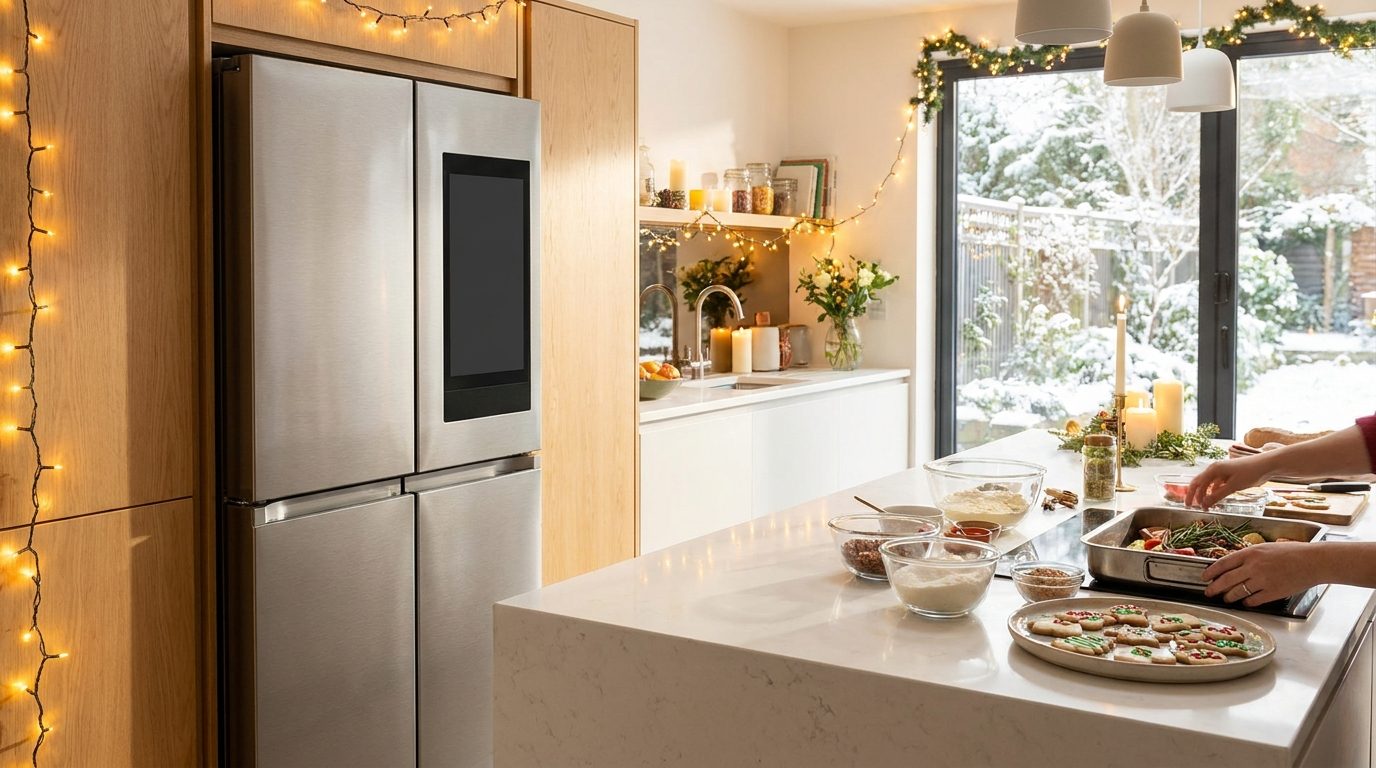
After the car, the TV and the smart speaker, online radio is now heading into the kitchen. US manufacturer GE Appliances, based in Louisville, Kentucky, has announced that the iHeartRadio audio platform, owned by iHeartMedia, will soon be integrated into some of its connected home appliances. The move illustrates the growing number of screens able to play a radio stream.
A feature delivered by update
The integration does not require buying a new appliance. It will be rolled out through a remote software update, known as OTA (Over-The-Air). Two ranges are involved:
- the GE Profile four-door smart refrigerator, equipped with the Kitchen Assistant interface;
- connected built-in wall ovens featuring Cooking Assistant.
From the screens of these appliances, users will be able to listen to live radio stations, podcasts and music programmes, including holiday season selections. No specific availability date has been announced, however.

Listening without reaching for your phone
The pitch is simple: in the kitchen, your hands are often busy. Being able to start a station straight from the fridge or the oven means no extra device and no fiddling with a smartphone. Conal Byrne, CEO of iHeart Digital Audio Group at iHeartMedia, describes audio as a cornerstone of holiday traditions and sees the integration as a way to bring radio into the heart of the home, where people gather with loved ones.
On the manufacturer's side, Rachael Schwartz, executive director of product management at GE Appliances, explains that the company wants its appliances to keep improving long after they have been installed. Remote updates make it possible to add services when households need them most, such as during the busy holiday period.
One more screen in the home
This kind of deal confirms a trend: digital radio is no longer limited to traditional audio devices. Any object with a screen and an internet connection can become a receiver. For listeners, it means smoother listening throughout the day. For publishers, it means new touchpoints, but also tougher competition to be the default choice.
What it means for web radios
Large aggregators such as iHeartRadio are the first to benefit from these partnerships. Independent web radios can still draw several lessons:
- Being listed with aggregators and directories remains the most realistic way to appear on these new screens, since manufacturers rarely integrate stations one by one.
- Offering a standard, stable stream (MP3, AAC, HLS) makes playback easier on devices with varied capabilities.
- Taking care of logo and metadata: on a fridge or oven screen, the station's visual identity and the current track are often the only elements displayed.
- Thinking about everyday moments: cooking, meals and holidays are listening slots well suited to themed programming.
For a web radio, the challenge is not to negotiate with each manufacturer, but to make its stream as easy as possible to integrate wherever listening goes.
Source : La Lettre Pro