

AIMC (Asociación para la Investigación de Medios de Comunicación), the Spanish body behind the EGM audience study, has published the 12th edition of its annual radio survey, carried out among its AIMC Q Panel of internet users. Conducted from 18 May to 15 June 2026 with 1,111 valid interviews, the "Radio 2026" study looks at live listening, internet radio, catch-up and podcasts, as well as how people consume radio content with pictures on social networks and video platforms.
Daily listening remains strong
The first finding: radio is still a habit for connected Spaniards. 72% of the internet users surveyed listened the day before, and 87% in the previous 30 days. Listening is higher on weekdays than at weekends, confirming its close link with daily routines and commuting.
FM leads, internet listening becomes part of the day
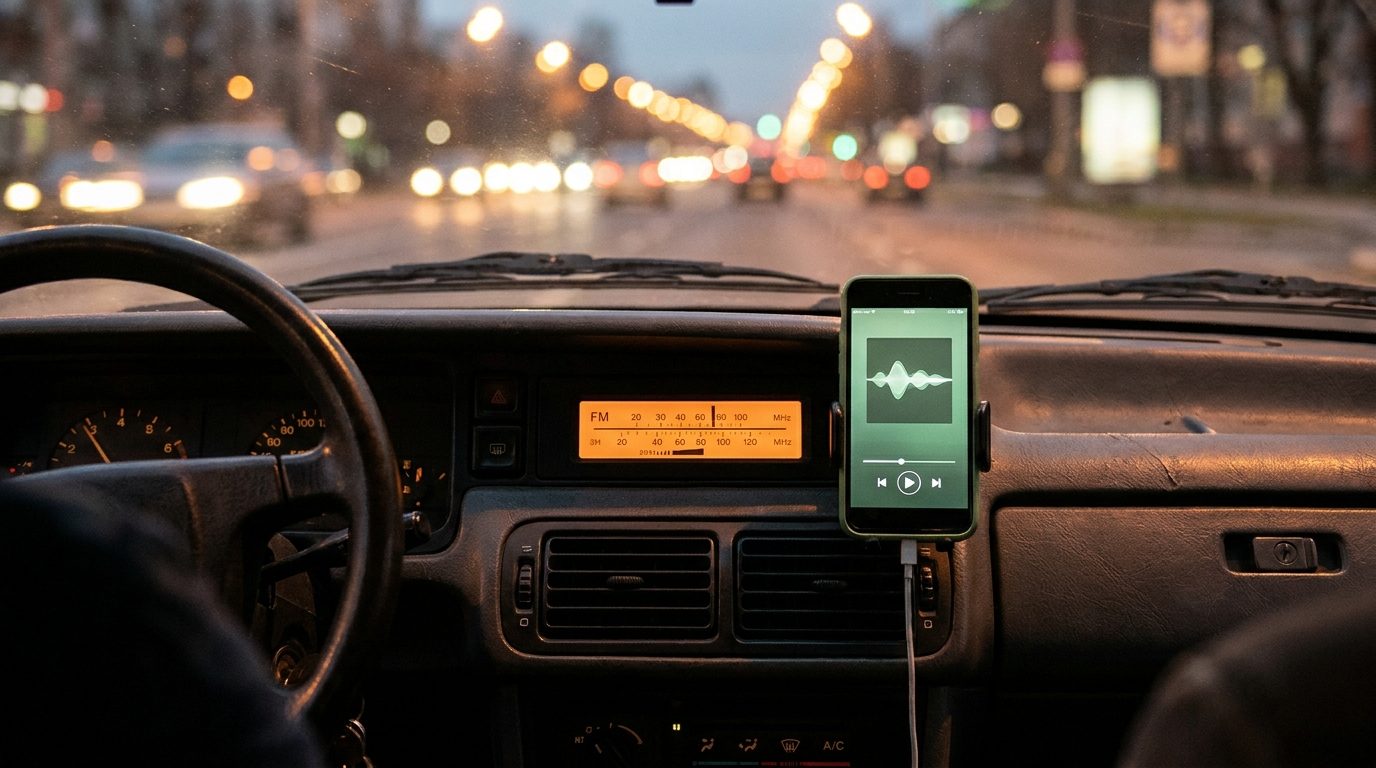
Even within a connected population, broadcast radio keeps the upper hand: 88% of daily listeners tune in via FM. The car remains the main listening location, cited by 51% of internet users. In the car, 79% have used FM or AM as an audio source and 64% name it as their main source, despite competition from music streaming.
Online listening is nonetheless growing in everyday use: 33% of listeners on an average day go through the internet at some point. Monthly reach for online radio, however, has levelled off at 51%, back to its 2024 level after last year's increase. The smartphone is the reference device, used by 77% of live online radio listeners and 80% of catch-up or podcast listeners. Home is still the main place for digital listening, but the car, walking, work and the gym are gaining ground.
Podcasts: more frequent, and often from the airwaves
56% of podcast listeners listened the day before, six points more than in the previous edition, and 82% stream episodes directly without downloading them first. Catch-up listening is still largely fed by radio: 49% of podcast listeners listen to programmes that have already been broadcast, and 31% mix those shows with original podcasts. The share of people who listen only to original productions is falling.
Another notable shift: for podcasts, the station's own website has become the main point of access, while aggregator apps are losing ground. Paying is also on the rise, though still a minority habit: 17% say they have subscribed to a podcast platform.
Radio is watched, but listened to first
45% of internet users frequently or occasionally watch radio clips with pictures, mainly on YouTube and Instagram, and one in four has followed live radio through a social network or video platform. Pictures remain an add-on, though: 82% consider them secondary or say they could follow the content in audio only. The clips mainly work as a gateway, since 35% say they went on to listen to the full programme in audio after watching an excerpt.
What it means for web radio stations
- Look after your website and player: when official channels regain ground over aggregators, a fast, mobile-friendly player and a clear catch-up page become direct assets.
- Think mobile first: with nearly eight in ten online listeners on a smartphone, the small-screen experience (stable stream, recovery after drop-outs, controlled data use) is a priority.
- Turn your shows into podcasts: a large share of catch-up listeners choose programmes that have already aired. Cutting shows into episodes is a simple way to extend their life.
- Use video as a shop window: a few short clips on YouTube or Instagram can help people discover a show without filming the whole live broadcast, since audio remains what matters for most of the audience.
The message from Spain is twofold: FM is not fading away, but daily digital listening, podcasts and discovery through video are all growing. These are exactly the areas where an online station can stand out.
Source : AIMC