
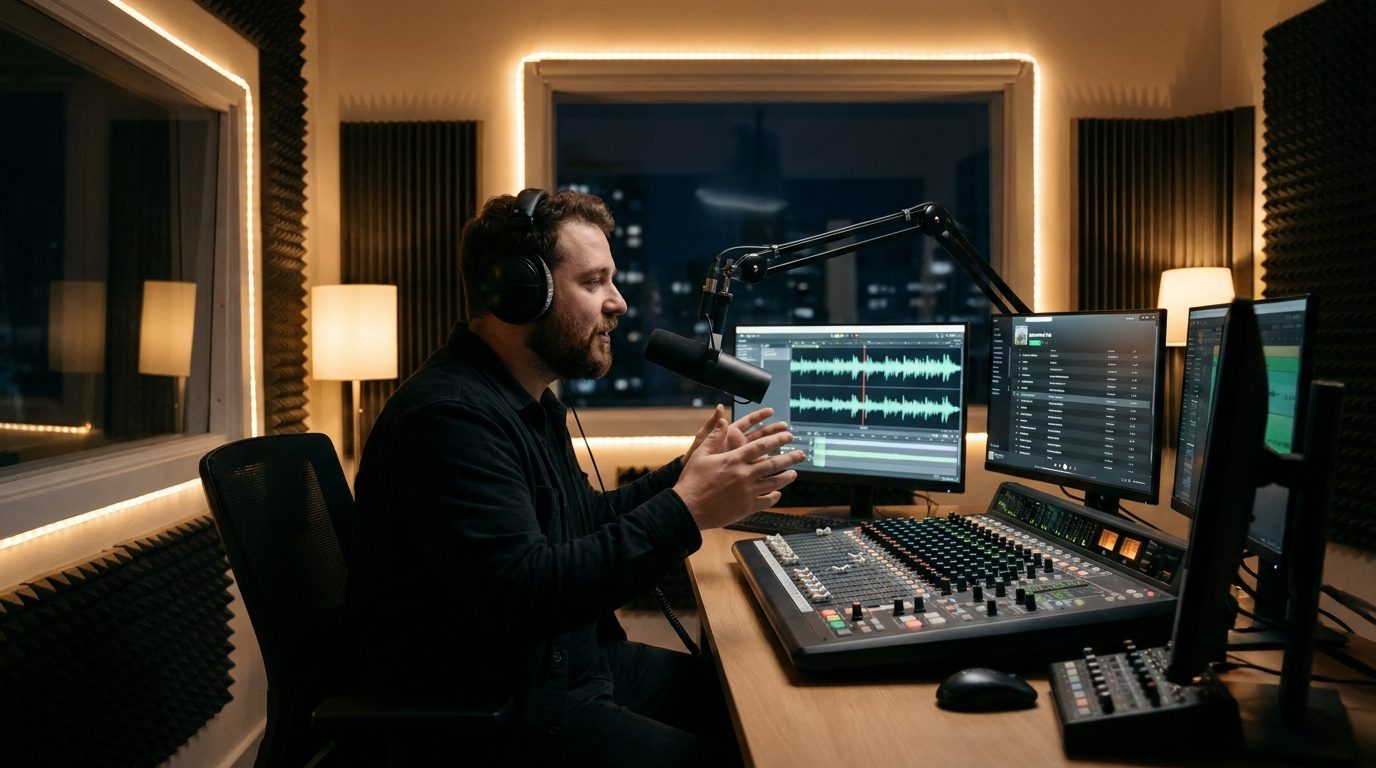
For more than a decade, Apple kept quiet about how many people tune in to its radio programming. That silence has now been broken: according to Zane Lowe, Global Creative Director of Apple Music, the service's radio offering now reaches more than 50 million unique listeners every month. The figure was shared in an interview with the US trade magazine Billboard and picked up by the German site RADIOSZENE. It is the first time the company has given a concrete order of magnitude for the reach of its stations.
One global figure, no breakdown by station
The 50 million covers Apple Music's entire radio offering. Zane Lowe gave no breakdown by programme, market or type of listening. So there is no way to know how much comes from Apple Music 1, the flagship station launched as Beats 1 around eleven years ago, or how listening splits between live and other uses. This is a figure supplied by the company itself, not an independent audience measurement.
It is still a strong signal for online radio as a whole: a station broadcast only inside a streaming app claims a monthly audience counted in the tens of millions.
6,500 artists played in 2026
The second figure highlighted concerns musical diversity. Since the start of 2026, Apple Music Radio has reportedly played more than 6,500 different artists. More than half are said to be newcomers or acts that are not yet well established, meaning around 3,300 musicians were able to reach a wider audience, sometimes with their very first song, first EP or debut album.
Zane Lowe sees this as what sets his model apart from traditional commercial radio, which is often built on tight playlists and heavy rotation. Apple, by contrast, embraces a much broader music selection.
Human voices rather than an algorithm
Another claimed difference: while other streaming platforms rely on automated recommendations, Apple Music Radio bets on hosts, music editors and editorial formats that put music in context and give artists a personal platform. High-profile guests are part of the recipe: King Charles III recently appeared on the show "Rocket Hour" alongside Elton John.
A former BBC Radio 1 presenter, Zane Lowe has shaped the editorial direction since Beats 1 launched. He admits that winning over established artists was difficult at first, which led the team to focus on up-and-coming talent. Billie Eilish, Khalid and Bryson Tiller were among the early artists it supported before their careers took off internationally.
What it means for webradios
For webradio publishers, these figures confirm several hunches:
- Live online radio has a real audience: a station with no FM or DAB+ frequency can gather a sizeable audience if it is available where people already listen to music.
- Personality is still an asset: against automatically generated playlists, a presenter's voice and a music programmer's work make the difference.
- Discovery is a positioning: a broad playlist open to emerging artists sets a webradio apart from high-rotation stations.
- Transparent numbers matter: the lack of detail is a reminder of how useful it is for a publisher to have clear, verifiable listening statistics to show advertisers and artists alike.
An independent webradio obviously does not have Apple's distribution power. But the model Apple is promoting, an editorial, human and curious radio, is within reach of any passionate team.
Source: RADIOSZENE