

Floods, epidemics, cyberattacks or international tension: when the news becomes worrying, which media do French people turn to? The sixth wave of the Decrypt'Media study, conducted by Havas Media Network and CSA Research, puts figures on the answer. Television remains in first place, but live radio comes right behind it, cited by 36% of respondents.
A survey focused on major risks
The questionnaire was carried out online from 14 to 21 September 2026 among 1,010 French people aged 18 and over. This edition looks specifically at how the public keeps informed about five broad families of risk: natural, health, technological, cyber and terrorist.
Interest in the news remains high: 89% of respondents say they follow at least one news topic in the media, and 75% follow at least one of the risks studied. Natural phenomena (extreme weather, heatwaves, floods, storms) lead with 57% of mentions, ahead of international tensions (50%) and politics (49%).
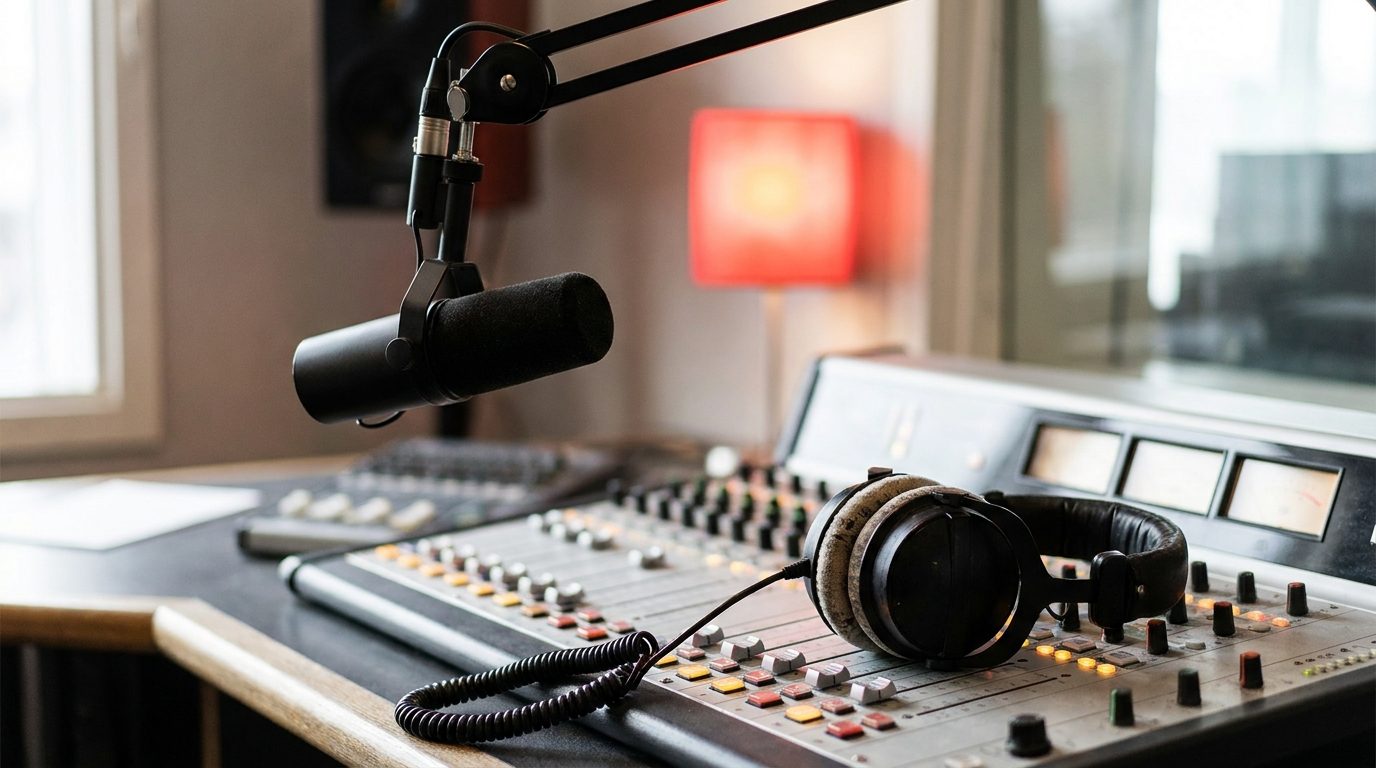
Live coverage is the public's first reflex
To follow a crisis, respondents favour media that broadcast in real time:
- 62% cite live television channels, rising to 68% when replay platforms are included;
- 36% cite live radio;
- 30% cite news websites and apps, 25% print newspapers;
- 24% cite weather apps and 20% Facebook or Instagram.
Social-native news outlets and YouTube each score 14%, while TikTok and conversational AI tools peak at 8%. In other words, when the stakes are real, the public goes back to continuous, clearly identified streams.
Trust goes to experts first
The other lesson concerns whose voices people listen to. The French primarily cite scientists and technical experts (52%), frontline professionals such as doctors, firefighters or cybersecurity specialists (51%), and then elected officials and government services (50%). Journalists are mentioned by only 42% of respondents and influencers by 10%.
Trust scores confirm this ranking: 8.3 out of 10 for professionals and 8.2 for scientists, compared with 7.0 for journalists, who come last, behind influencers (7.4). Havas sums it up this way: in times of crisis, the public is looking less for a mass of information than for points of reference.
Gaps between generations and regions
Only 64% of 18-24 year-olds follow at least one major risk, compared with 85% of those aged 65 and over. Among the youngest, digital-native news media overtake television (73% versus 60%), and 27% cite influencers, against 3% of seniors. Geography matters too: 81% of people in the Paris region follow at least one major risk, compared with 62% in the North region.
What this means for web radio stations
These results are a reminder that live broadcasting remains radio's great strength, including when it is heard on a smartphone, a smart speaker or a website. For a web radio station, several avenues emerge:
- Plan an "alert" mode: be able to interrupt automated programming to relay official instructions or a situation update.
- Give experts a voice: a local firefighter, doctor or engineer inspires more trust than generic commentary.
- Play the local card: the regional differences show that information tailored to an area reaches its audience better.
- Take care of technical reliability: a stream that drops just as listeners flood in wastes the trust that has been earned.
For themed or local web radio stations, the study offers a concrete argument: being a point of reference that is available around the clock, with credible voices, remains something on-demand platforms struggle to replace.
Source: J'ai un pote dans la com