

Apple announced on 16 November 2026 that video podcasts available on Apple Podcasts will soon arrive in the Apple TV app. Podcasts will be featured like any other programme, with a dedicated row in the interface. The feature is already visible to developers in the 27.3 beta versions of Apple's operating systems, and the public release is expected with the 27.3 update, most likely before Christmas: in previous years, this kind of release has landed around 11 or 12 December.
One more showcase for creators
Apple presents the move as an opportunity for creators to reach new audiences. The company does not disclose Apple TV subscriber numbers, but one of its executives, Eddy Cue, put the figure a year ago at "significantly more" than 45 million. The service is offered in 170 countries, around a hundred of which include it at no extra cost in the iCloud+ plan.
Importantly, the Apple TV app works well beyond Apple's own ecosystem. It is available on Android phones, Google TV, PlayStation and Xbox consoles and Roku devices, where the Apple Podcasts app is missing or hard to install. Access to Apple TV content is, however, limited to subscribers, with a free trial period.
Synced playback, still free
Video podcasts will remain free for everyone in Apple Podcasts. Playback will be synced between the two apps: an episode started on an iPhone can be resumed on the living-room TV at exactly the point where it was paused.
Apple used the announcement to share some figures. Over the past three months, the number of shows publishing video on Apple Podcasts has more than doubled and the catalogue of video episodes has nearly tripled. Top podcasts that added video saw their total audience grow by more than 20% on average.
Hosting platforms already on board
The infrastructure is keeping pace. Megaphone added HLS video delivery for Apple Podcasts last week. According to Podnews, the ten leading podcast hosts now all offer video for Apple Podcasts, or a migration path to get there, for example from Spotify for Creators to Megaphone, or from Spreaker to Omny Studio.
What it means for web radio
The TV is becoming a screen in its own right for audio enhanced with video. For web radio stations that already film their morning shows or programmes, or that repackage their output as podcasts, several consequences emerge:
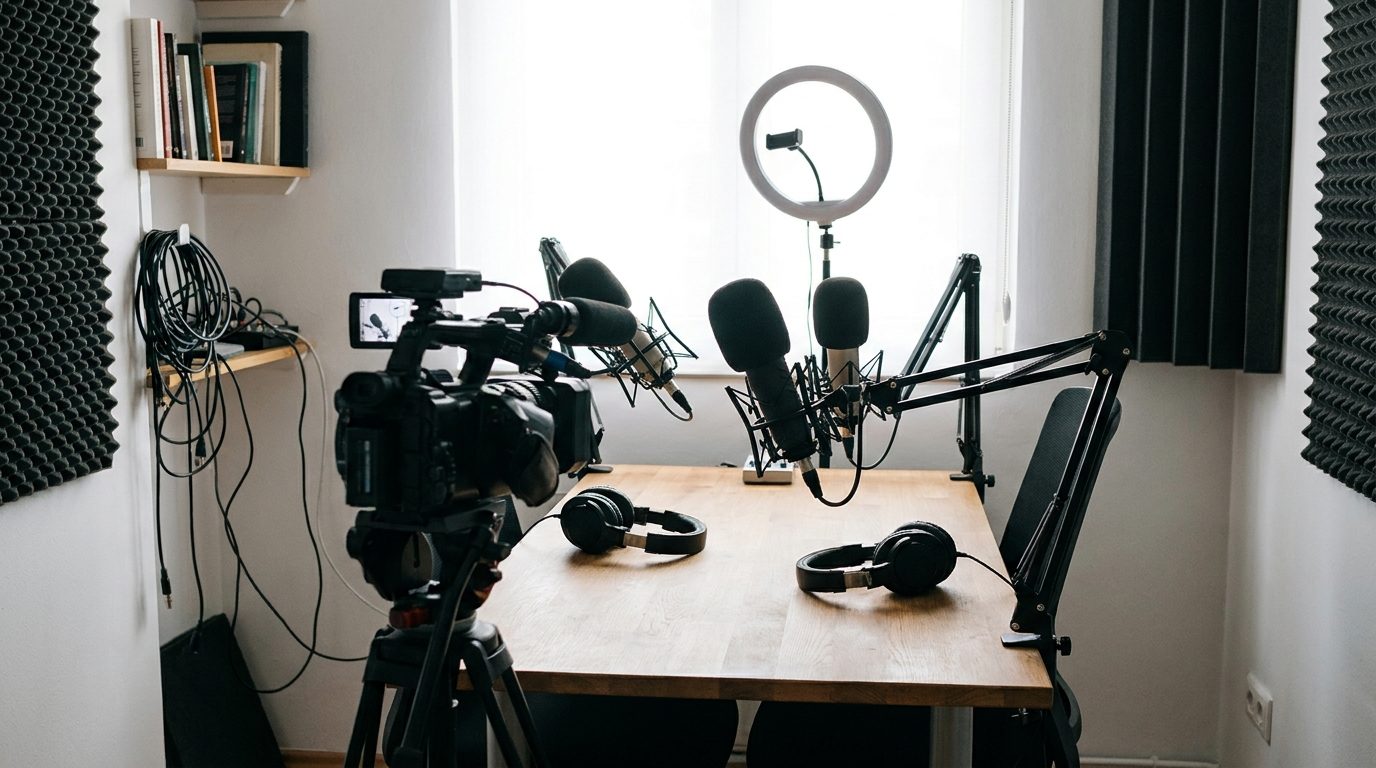
- Think video from the recording stage: a simple camera in the studio can open the door to Apple TV's podcast row.
- Check your hosting platform: it must support video compatible with Apple Podcasts, otherwise a migration will be needed.
- Take care of visuals: on a big screen, thumbnails and branding matter as much as sound.
Live broadcasting remains the core of a web radio station's work, but repurposing its best moments as video is becoming an audience driver that is hard to ignore, especially in the run-up to the holidays, when the living-room TV is in heavy use.
Source : Podnews